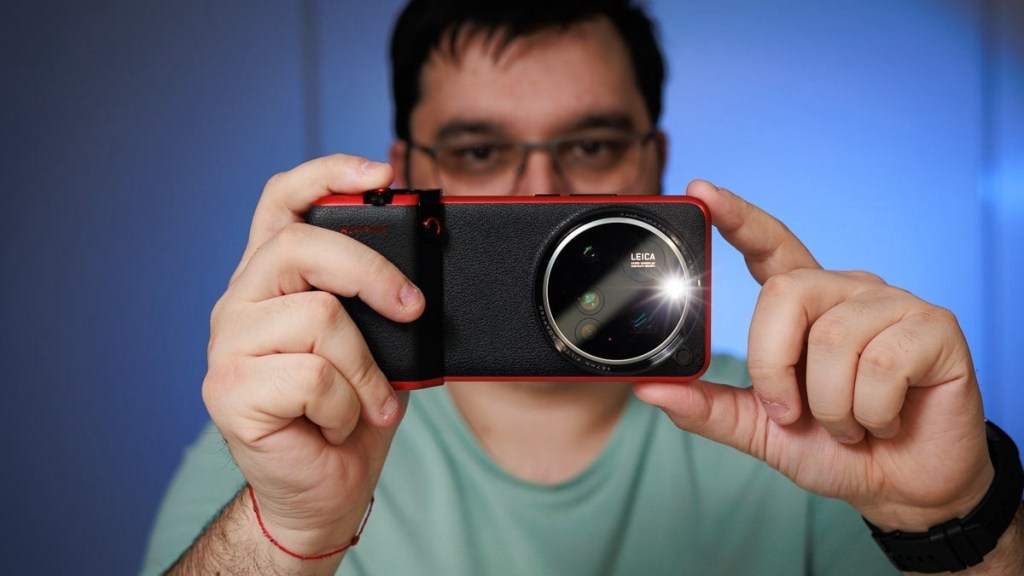
Sony isn’t the only company pushing into the next wave of ultra-large smartphone sensors these days. OmniVision has unveiled the OVB0D, a new 200 MP flagship image sensor designed to rival Sony’s freshly announced LYTIA 901, while simultaneously intensifying the pressure on Samsung.
The OVB0D: A massive 1/1.1-inch 200 MP sensor
According to a report from Korean media, the OVB0D is a 200 MP 1/1.1-inch sensor. That makes it slightly larger than Sony’s LYT-901 which measures 1/1.12 inches. The difference isn’t huge though, and when comparing phones that use these sensors the results will mostly come down to which manufacturer has done a better job with the image processing.
Unlike Sony’s more complex Quad-Quad Bayer Coding (QQBC) pixel structure, OmniVision has opted for a traditional Bayer filter with a dual on-chip remosaic system.
Early speculation suggests that Sony’s QQBC layout could still hold the edge when it comes to detail due to its 16-in-1 pixel grouping and AI-powered reconstruction pipeline, but the OVB0D is clearly playing in the same high-end league.
Technically, both sensors represent a major break from the typical 1/1.3-inch class used in many flagships today, including Samsung’s Galaxy Ultra phones.
Huge dynamic range, advanced HDR, and high full-well capacity
The OVB0D pushes image processing beyond what most 200 MP sensors currently offer. The key features include:
- 400k full-well capacity (FWC) for better highlight retention — this means the sensor can hold more light before the bright areas become white, helping the camera preserve detail said bright areas: things like skies and reflections, for example.
- 108 dB dynamic range, matching the top tier of smartphone HDR — A wide range like this lets the camera capture bright and dark areas at the same time without losing detail.
- DCG + LOFIC Gen 2 multi-frame HDR processing — These are two exposure-blending techniques that combine multiple brightness levels into one shot, improving image clarity in difficult lighting.
- A dual-stage remosaic system for detail reconstruction — This system reconstructs all 200 million pixels more accurately when shooting at full resolution, improving fine textures and small details. This would make things like fabric or a tree’s leafs look sharper.
The LOFIC Gen 2 pipeline in particular allows the sensor to capture detail in extreme mixed lighting — bright windows, deep shadows, neon, and harsh sunlight — while maintaining color accuracy and highlight detail. On paper, it’s highly competitive with Sony’s LYT-901, which also leans on advanced HDR and AI-driven upscaling.






Leave a comment